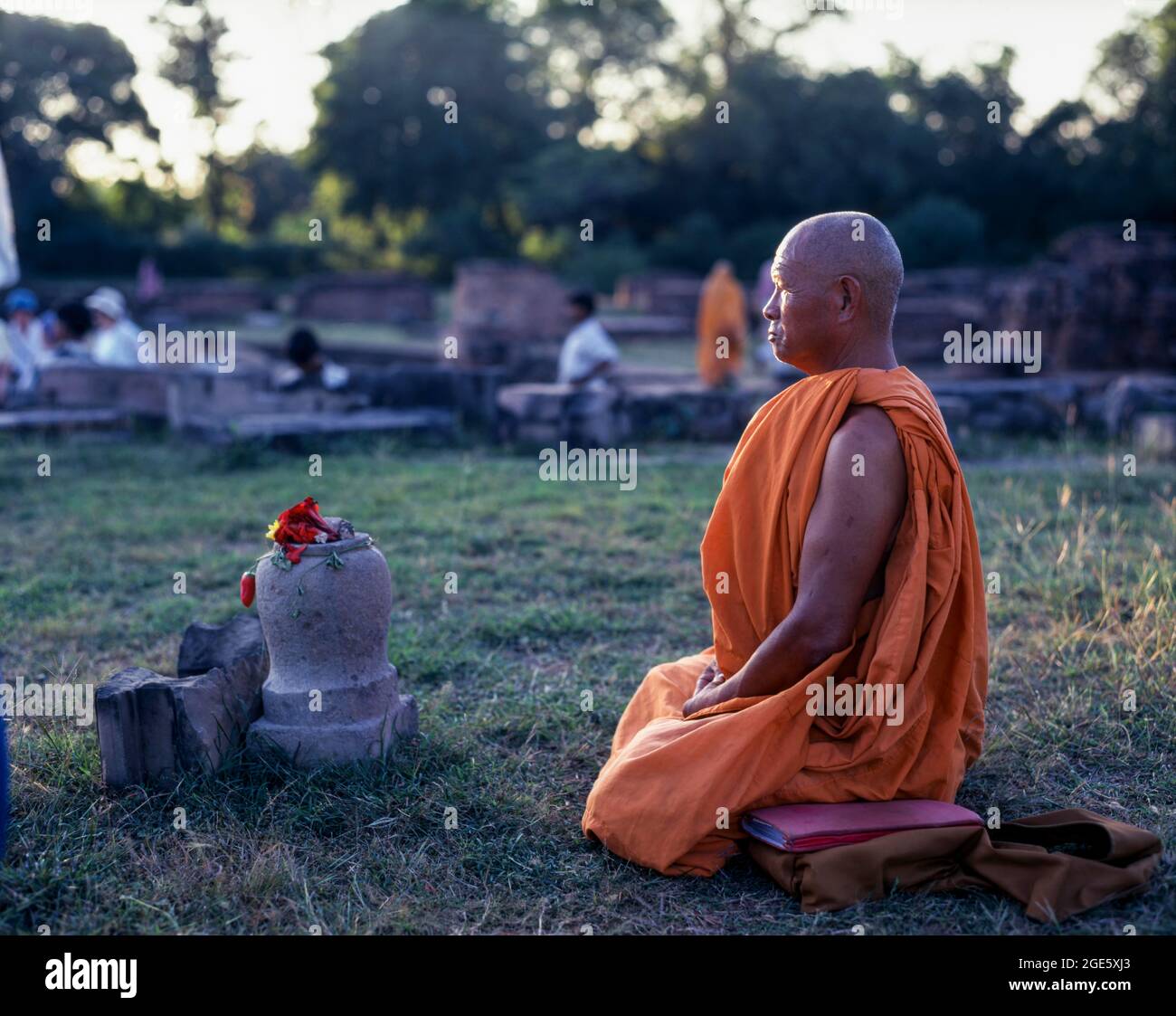
Prajñā (Chinese: 般若三藏 or 般若; pinyin: Bōrě Sāncáng or Bō Rě, 734), was a 9th-century Buddhist monk born in Kapisa, near modern Kabul, Afghanistan.
He visited Tang China and contributed several important retranslations of Sanskrit sutras into Chinese. Some of his main works are:
- The Avatamsaka Sutra (Chinese: 華嚴經)
- The Heart Sutra (Chinese: 大乘理趣六波羅密多經)
- The Mahayana Sutra of Mind Meditation from the Jataka tales (Chinese: 大乘本生心地觀經)
Prajñā reportedly befriended the Japanese monk Kūkai, future founder of Shingon Buddhism, during his pilgrimage to China. He is said to have helped Kūkai learn and understand Sanskrit source texts.
According to the Zhenyuan Catalogue, Prajñā translated a work known as the Satparamita Sutra into Chinese with the help of the Christian monk Jingjing. This work does not survive.
See also
- Silk Road transmission of Buddhism
References
Further reading
- Keown, Damian (2003). Dictionary of Buddhism. New York: Oxford University Press. ISBN 0-19-860560-9