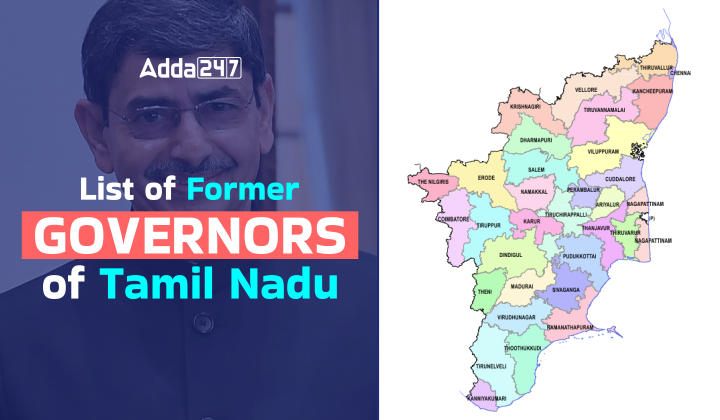
The governor of Tamil Nadu is the head of the Indian state of Tamil Nadu. Governors in India have similar powers and functions at the state level as those of the president of India at the central level. They exist in the state appointed by the president of India and they are not local to the state that they are appointed to govern. The factors based on which the president evaluates the candidates is not mentioned in the constitution. The governor acts as the nominal head whereas the real power lies with the chief minister of the state and their council of ministers.
The current incumbent is R. N. Ravi, who has served since 18 September 2021.
Powers and functions
The governor enjoys many different types of powers:
- Executive powers related to administration, appointments and removals,
- Legislative powers related to lawmaking and the state legislature, that is Vidhan Sabha or Vidhan Parishad, and
- Discretionary powers to be carried out according to the discretion of the Governor.
Governors
This is a list of the governors, agents, and presidents of colonial Madras, initially of the English East India Company, up to the end of British colonial rule in 1947.
English Agents
In 1639, the grant of Madras to the English was finalized between the factors of the Masulipatnam (now Machilipatnam) factory (trading post), represented by Francis Day, and the Raja of Chandragiri. In 1640, Andrew Cogan, the chief of the Masulipatnam factory, made his way to Madras in the company of Francis Day and the English and Indian employees of the Masulipatnam factory. The Agency of Madras was established on 1 March 1640 and Cogan was made the first Agent. The official title was 'Governor of Fort St George' and the Governor was usually referred to as Agent. Cogan served in the post for three years and was succeeded by Francis Day. After four agents had served their terms, Madras was upgraded to a Presidency during the time of Aaron Baker. However financial considerations forced the company to revert to an agency soon after Aaron Baker had served his term. The Agency survived until 1684 when Madras was made a Presidency once and for all. Streynsham Master is the best remembered and most renowned of the Agents of Madras.
Presidents
Madras was elevated to a presidency in 1684 and remained so until 12 February 1785 when new rules and regulations brought by the Pitt's India Act reformed the administration of the East India Company with the exception of a three-year period of French rule from 1746 to 1749 when Madras was a governorship.
Subsequently, Elihu Yale who took charge on 8 August 1684 was the First President of Madras. Elihu Yale, Thomas Pitt and George Macartney are some of the well-known Presidents of Madras.
Governors of the French East India Company
In 1746, Dupleix's deputy, La Bordannais laid siege to Madras and captured the city. For the next three years, Madras remained under French Governors, until 1749, when Madras was handed to the British as per the Treaty of Aix-la-Chappele. The illustrious Mahe de la Bordannais served as acting Governor for a few months until the appointment of Governor Jean-Jacques Duval d'Eprémesnil, who served until 1749 when Madras reverted to British rule.
Presidents of the British East India Company
During the period between 1746 and 1749, when Madras was under French rule, the British ran a provisional government from Fort St. David, near modern-day Porto Novo. In 1752, when Madras had been returned to the British, the then President of Madras, John Saunders, shifted the seat of government from Fort David to Madras. The British gained a lot of territory during the mid-18th century, so that by the time the French military power was crushed at the Battle of Wandiwash in 1761, the territory under the Presidency of Madras had increased manyfold. In 1785, the Province of Madras was created and the President became the Governor of Madras.
Governors (of British India)
Madras Presidency and Madras State
Headquartered in Fort St. George, Madras Presidency was a province of British India. It comprised present-day Tamil Nadu, the Malabar region of North Kerala, the coastal and Rayalaseema regions of Andhra Pradesh, and the Bellary, Dakshina Kannada, and Udupi districts of Karnataka. It was established in 1653 to be the headquarters of the English settlements on the Coromandel Coast. After India's independence in 1947, Madras State, the precursor to the present day state of Tamil Nadu, was carved out of Madras Presidency. It comprised present-day Tamil Nadu and parts of present-day Karnataka and Kerala.
Governors
Graphical
Tamil Nadu
Madras State was renamed as Tamil Nadu (Tamil for Tamil country) on 14 January 1969. Governors have similar powers and functions at the state level as that of the President of India at the Central government level. The Governor acts as the nominal head of the state while the Chief Ministers of the states and the Chief Minister's Council of Ministers are invested with most executive powers.
- Graphical
Records
- Surjit Singh Barnala is the only appointed Governor to have served two terms in office (24 May 1990–15 February 1991 and 3 November 2004–31 August 2011).
- The longest term in office was that of Surjit Singh Barnala who served as the Governor for a period of almost six and a half years (3 November 2004–31 August 2011).
- The shortest term in office was that of M. M. Ismail who served as the acting Governor for a period of nine days (27 October 1980–4 November 1980).
- The longest term in office as additional in-charge was that of C. Vidyasagar Rao for a period of 1 year 1 month and 4 days (2 September 2016– 6 October 2017).
See also
- Governors of India
- History of Tamil Nadu
- List of chief ministers of Tamil Nadu
- List of colonial governors and presidents of Madras Presidency
Notes
References
External links
- Official website of the Governor of Tamil Nadu
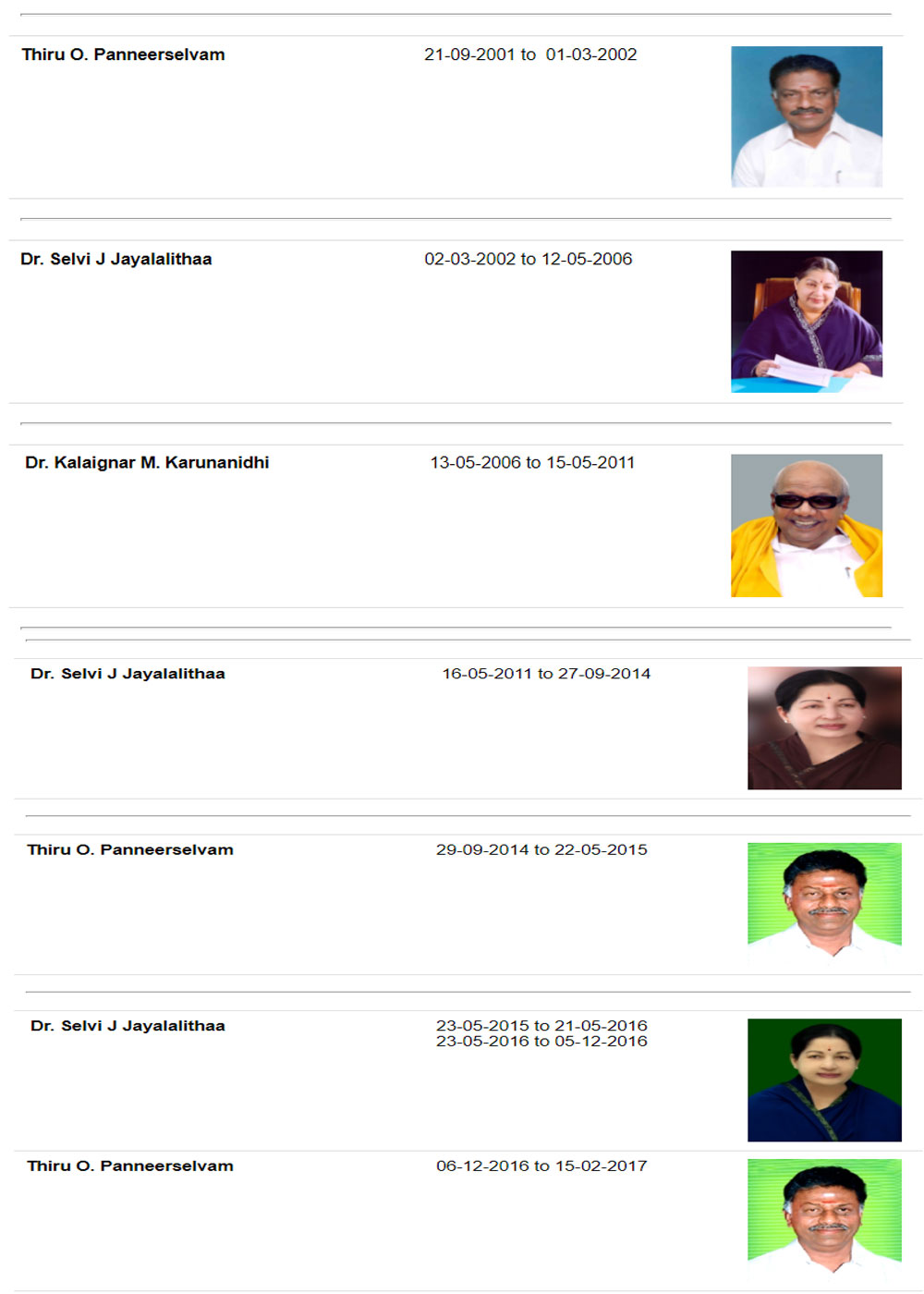
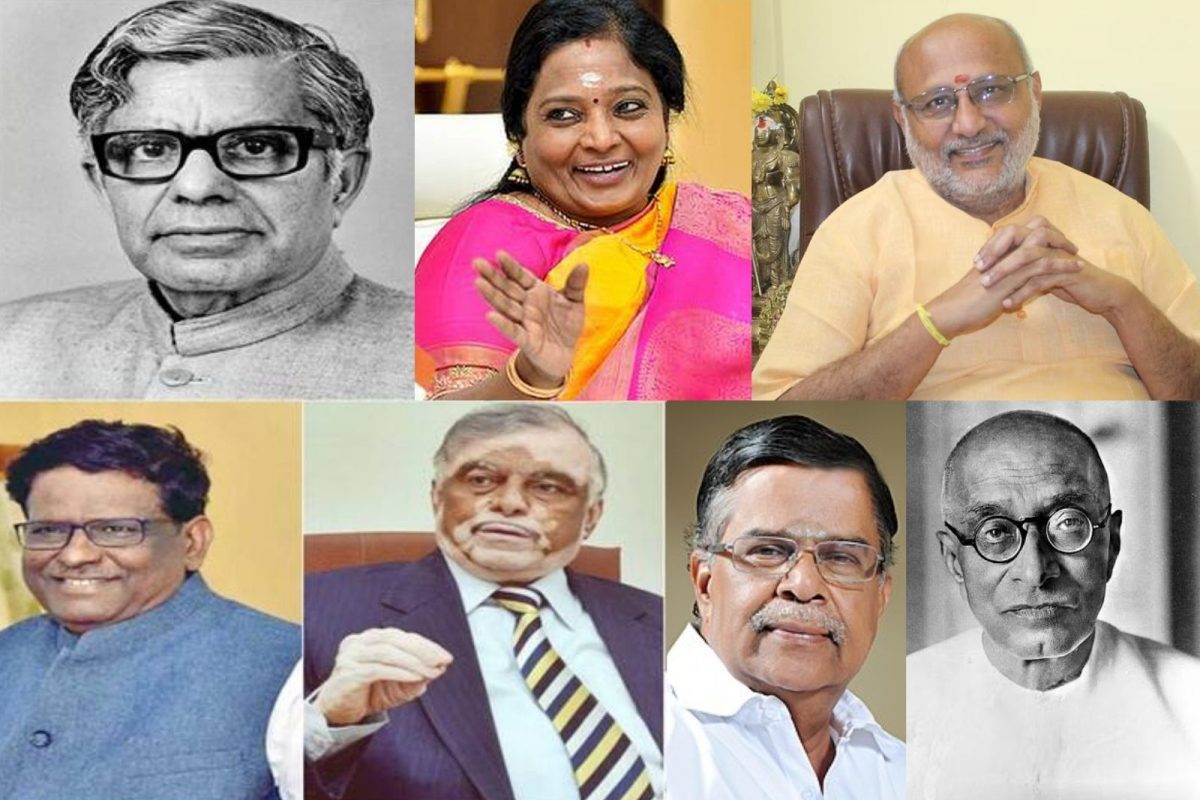)